
Introduction: Most Beautiful Natural Places in the World
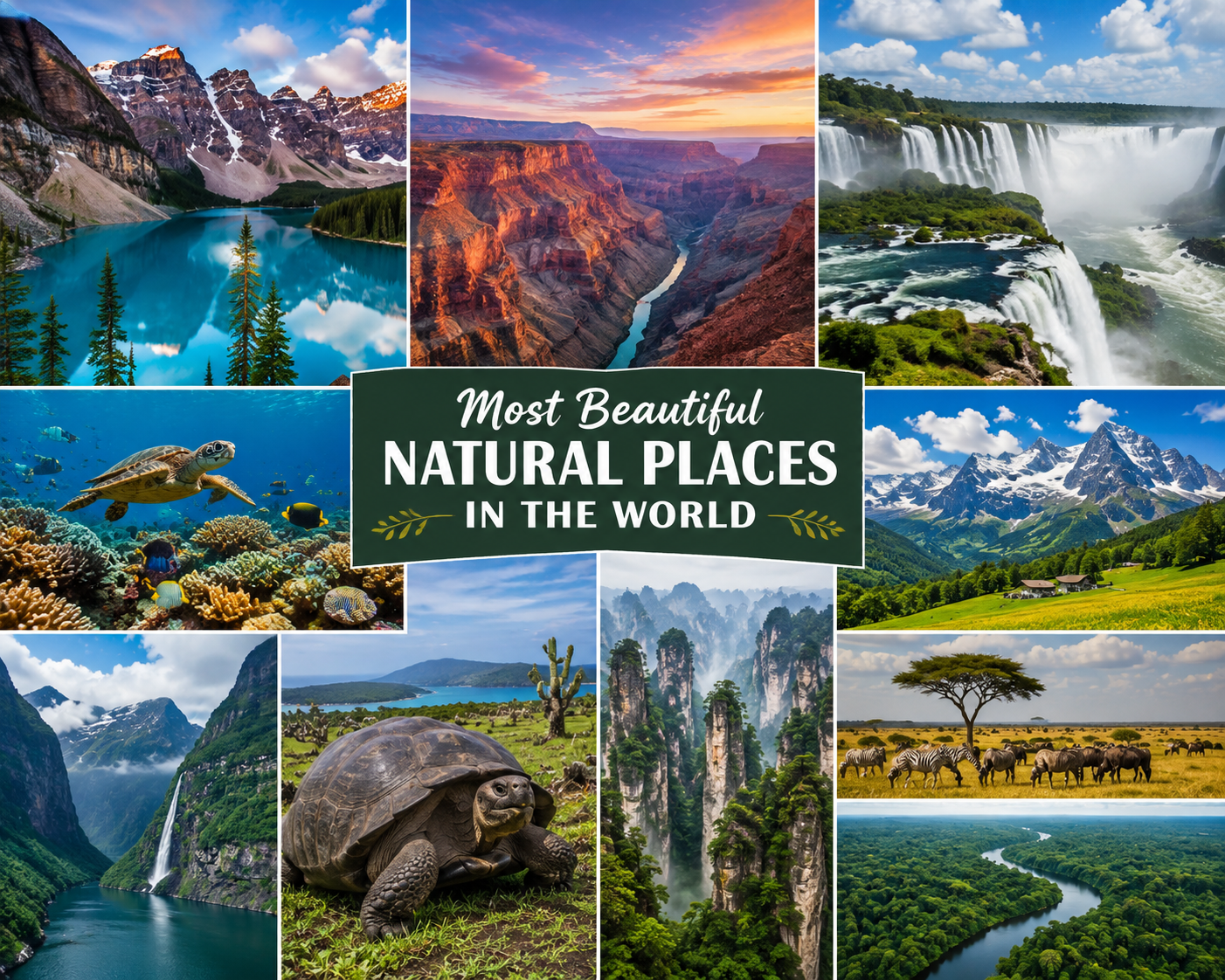
The most beautiful natural places in the world remind us how extraordinary our planet really is. From towering mountains and turquoise lakes to enormous waterfalls, tropical islands, deep canyons, and ancient forests, nature has created landscapes that seem almost too beautiful to be real.
Every continent has its own natural treasures. Some landscapes are shaped by glaciers, while others have been carved by rivers, oceans, wind, volcanoes, or millions of years of geological change.
The beauty of these places is not only about their appearance. Natural landscapes can also provide habitats for wildlife, protect ecosystems, support local communities, and preserve important geological and ecological features. UNESCO describes natural World Heritage sites as areas recognized for exceptional natural beauty, biodiversity, ecosystems, and geological values.
There are thousands of incredible natural destinations around the planet, so no list can truly identify the single “best” places. The following selection is a curated collection of some of the most beautiful natural places in the world, chosen for their remarkable landscapes, diversity, and ability to inspire visitors.
1. Most Beautiful Natural Places: Banff National Park, Canada
When people imagine the most beautiful natural places, Banff National Park is often the kind of landscape that comes to mind.
Located in Canada’s Rocky Mountains, Banff combines towering mountain peaks, glacial lakes, dense forests, rivers, and dramatic valleys. Parks Canada describes Banff as Canada’s first national park and highlights its combination of Rocky Mountain peaks, glacial lakes, and outdoor experiences.
One of the most famous attractions in the area is Lake Louise, known for its turquoise-colored water surrounded by mountains.
The landscape changes dramatically throughout the year. Summer brings green forests and blue skies, while autumn can add golden and orange colors to the scenery. Winter transforms the area into a snowy mountain landscape.
Banff is also important from an ecological perspective. Parks Canada reports that the park provides habitat for hundreds of bird and plant species as well as numerous mammals.
For anyone who loves mountains, lakes, forests, and wildlife, Banff represents one of the world’s most impressive examples of natural beauty.
2. Most Beautiful Natural Places: The Grand Canyon, USA
The Grand Canyon is one of the world’s most recognizable natural landscapes.
Located in Arizona, the canyon stretches along the Colorado River and reveals enormous layers of rock shaped by geological processes over immense periods of time. The National Park Service describes it as one of the world’s spectacular examples of erosion.
Standing near the rim, visitors can see layers of red, orange, brown, and golden rock extending toward the horizon.
What makes the Grand Canyon particularly fascinating is that its beauty is connected to its geology. The Colorado River and other erosional forces have helped shape the landscape, exposing layers that preserve evidence of Earth’s geological history.
Sunrise and sunset can make the canyon especially dramatic.
As sunlight changes, the colors and shadows across the cliffs can shift from bright gold to deep orange and purple.
The Grand Canyon demonstrates that some of the most beautiful natural places are also places where we can learn about the history of our planet.
3. Most Beautiful Natural Places: Iguazu Falls, Argentina and Brazil
Few sights in nature are as powerful as a massive waterfall.
Iguazu Falls, located along the border between Argentina and Brazil, is a spectacular system of waterfalls surrounded by tropical and subtropical vegetation.
The enormous volume of water, mist, cliffs, forests, and rainbows creates an unforgettable landscape.
Unlike a single waterfall, Iguazu consists of numerous cascades spread across a large area. The surrounding forest adds another layer of beauty, creating a combination of water and greenery.
The sound of rushing water can be overwhelming when viewed from close observation points.
The environment around the falls is also important for biodiversity, making the destination valuable not only for its scenery but also for its natural ecosystems.
Iguazu demonstrates why waterfalls have fascinated humans for centuries.
The combination of powerful water and lush vegetation makes it one of the most beautiful natural places to experience the energy of nature.
4. Most Beautiful Natural Places: The Great Barrier Reef, Australia
Not all of the world’s most beautiful landscapes are found on land.
The Great Barrier Reef off the coast of Australia is one of the planet’s most remarkable marine environments.
Its underwater world includes coral reefs, colorful marine life, islands, and clear tropical waters.
For visitors who enjoy the ocean, snorkeling, diving, or marine photography, the reef offers a completely different experience from mountain and forest destinations.
The colors beneath the surface can be extraordinary.
Corals, fish, sea turtles, and other marine organisms create a living environment that changes constantly.
The Great Barrier Reef also demonstrates that natural beauty can be extremely delicate.
Marine ecosystems face pressures from climate change, pollution, coastal development, and other environmental challenges.
Protecting places such as the Great Barrier Reef is therefore important not simply because they are beautiful, but because they contain valuable ecosystems and biodiversity.
It is an excellent reminder that the most beautiful natural places need protection so future generations can experience them.
5. Most Beautiful Natural Places: The Swiss Alps, Switzerland
The Swiss Alps offer a classic image of mountain beauty.
Snow-covered peaks, green valleys, alpine meadows, waterfalls, glaciers, and clear mountain lakes create a landscape that looks almost like a painting.
During summer, alpine valleys can become covered with wildflowers and green vegetation.
In winter, snow transforms the mountains into a completely different world.
The changing seasons are one of the reasons mountain environments are so fascinating.
A clear summer morning can provide views of distant peaks, while clouds and mist can make the same landscape feel mysterious.
The Alps are also an example of how people and nature interact. Villages, hiking paths, farms, and traditional landscapes exist alongside mountain ecosystems.
For photographers, hikers, and anyone who simply enjoys spectacular scenery, the Swiss Alps are easily among the most beautiful natural places in Europe.
6. Most Beautiful Natural Places: Milford Sound, New Zealand
Milford Sound is one of New Zealand’s most famous natural landscapes.
Located in Fiordland, the area is characterized by steep mountains, deep waters, waterfalls, forests, and dramatic cliffs.
One of the most impressive aspects of the landscape is its scale.
Mountains rise sharply from the water, while waterfalls can descend from high cliffs after periods of rain.
The weather adds another dimension to the scenery.
A sunny day can reveal mountains reflected in the water, while rainy conditions can create mist and temporary waterfalls.
This changing atmosphere makes Milford Sound feel different every time the weather changes.
The surrounding Fiordland environment is also known for its wilderness character.
For travelers searching for the most beautiful natural places, Milford Sound offers a powerful combination of mountains, water, forests, and weather.
7. Most Beautiful Natural Places: Galápagos Islands, Ecuador
The Galápagos Islands offer a different kind of natural beauty.
Instead of being famous only for dramatic scenery, these islands are particularly remarkable for their wildlife and evolutionary importance.
Located in the Pacific Ocean, the Galápagos contain volcanic landscapes, coastal areas, marine environments, and unique animal species.
Giant tortoises are among the islands’ most famous inhabitants.
Visitors may also encounter marine iguanas, sea lions, birds, and other wildlife.
The islands demonstrate that natural beauty can be found not only in mountains and waterfalls but also in the diversity of life.
A rocky volcanic landscape may appear simple from a distance, but the animals living there reveal a much more complex ecosystem.
This makes the Galápagos one of the most beautiful natural places for people who are interested in both scenery and wildlife.
8. Most Beautiful Natural Places: Zhangjiajie, China
Zhangjiajie is famous for its dramatic sandstone and quartzite formations.
Tall, narrow rock pillars rise above forests and valleys, creating a landscape that looks almost otherworldly.
Mist can move between the peaks, making the formations appear to float above the surrounding forest.
The combination of vertical cliffs, green vegetation, clouds, and changing light makes Zhangjiajie especially attractive to photographers.
The landscape also demonstrates the power of natural geological processes.
Over very long periods, weathering and erosion have helped shape unusual rock formations.
Unlike traditional mountain landscapes with broad peaks, Zhangjiajie’s narrow pillars create a distinctive visual style.
This unusual combination of geology and vegetation makes the region one of the most beautiful natural places for anyone fascinated by extraordinary landscapes.
9. Most Beautiful Natural Places: The Serengeti, Tanzania
The Serengeti represents a different form of natural beauty.
Instead of towering mountains or deep canyons, the landscape is characterized by vast grasslands stretching toward the horizon.
Golden grass, scattered trees, open skies, and large populations of wildlife create an unforgettable African landscape.
The Serengeti is particularly famous for its wildlife and seasonal movements of animals.
Seeing large herds moving across open grasslands demonstrates the scale and complexity of natural ecosystems.
Sunrise and sunset can be especially beautiful across the plains.
Warm light spreads across the grasslands while animals move through the landscape.
The Serengeti shows that the most beautiful natural places do not need dramatic mountains or waterfalls.
Sometimes the greatest beauty comes from openness, wildlife, silence, and enormous skies.
10. Most Beautiful Natural Places: The Amazon Rainforest
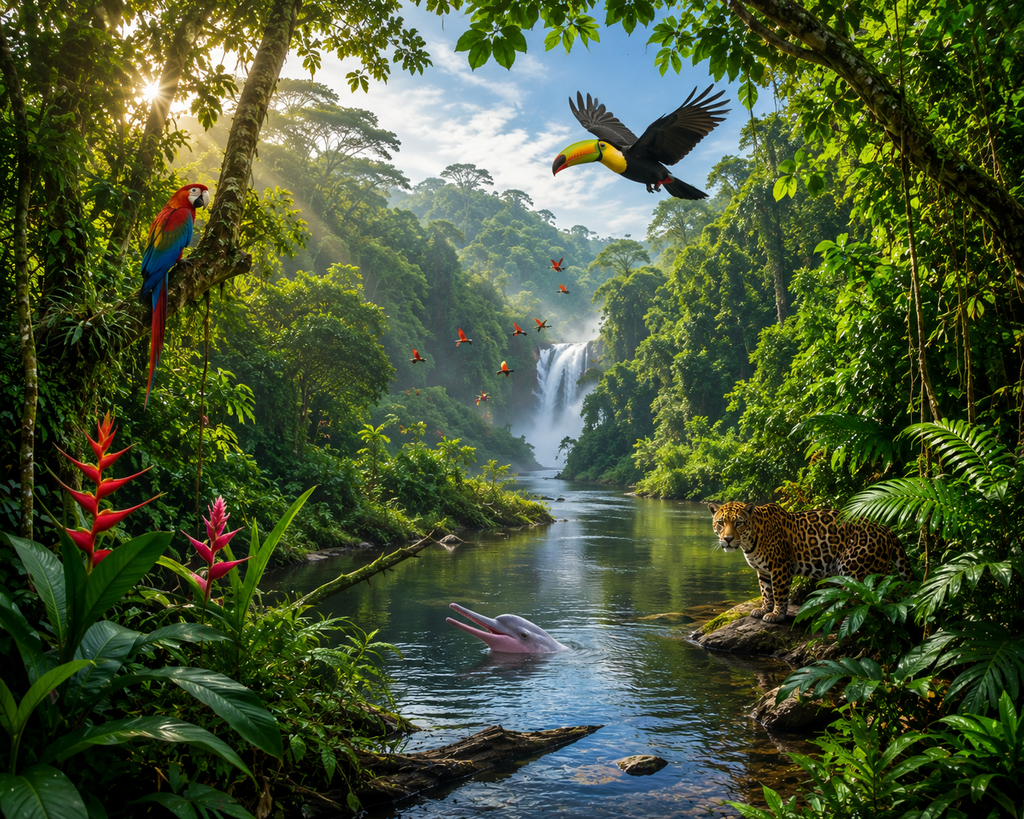
The Amazon Rainforest is one of the world’s most extraordinary natural environments.
Its enormous forests, rivers, wetlands, and extraordinary biodiversity make it far more than a beautiful landscape.
The rainforest can feel like a world of its own.
Tall trees form dense canopies, rivers move through enormous areas, and countless species interact within the ecosystem.
The sounds of birds, insects, flowing water, and other wildlife create a completely different experience from urban environments.
The Amazon also plays important ecological roles at regional and global scales.
Its biodiversity makes conservation especially important.
When people think about the most beautiful natural places, they sometimes imagine places that are visually spectacular from a viewpoint.
The Amazon offers another kind of beauty—one that is experienced by entering a complex living ecosystem.
What Makes the Most Beautiful Natural Places So Special?
The most beautiful natural places have one important thing in common: they show the incredible variety of Earth’s landscapes.
Consider the differences:
- Banff offers mountains and glacial lakes.
- The Grand Canyon reveals enormous geological formations.
- Iguazu provides spectacular waterfalls.
- The Great Barrier Reef represents underwater beauty.
- The Swiss Alps showcase alpine landscapes.
- Milford Sound combines mountains, forests, and water.
- The Galápagos combines wildlife with volcanic landscapes.
- Zhangjiajie features unusual rock formations.
- The Serengeti offers vast grasslands and wildlife.
- The Amazon demonstrates the richness of tropical ecosystems.
Together, these places show that there is no single definition of natural beauty.
Nature can be peaceful or dramatic, colorful or mysterious, enormous or delicate.
Why Should We Protect the Most Beautiful Natural Places?
The most beautiful natural places are valuable for much more than tourism.
Natural areas provide habitat for wildlife, protect biodiversity, preserve geological features, support water systems, and offer opportunities for scientific research and education.
They can also provide people with opportunities to relax, explore, photograph landscapes, and reconnect with nature.
UNESCO’s natural World Heritage program recognizes natural areas with exceptional universal value and emphasizes protection and management of important natural heritage.
However, beautiful landscapes can face serious environmental pressures.
Climate change, habitat loss, pollution, excessive tourism, deforestation, and poorly managed development can damage natural environments.
Responsible tourism can make a difference.
Visitors can follow local rules, avoid littering, stay on designated trails, respect wildlife, avoid damaging plants, and support conservation efforts.
Protecting nature is not only about preserving beautiful photographs.
It is about protecting the ecosystems that make these landscapes possible.
How to Enjoy the Most Beautiful Natural Places Responsibly
If you visit one of the most beautiful natural places, remember that you are entering a living environment.
A few simple principles can help protect these places.
Respect Wildlife
Observe animals from a safe distance and never feed or disturb them.
Avoid Littering
Carry your waste with you and use designated disposal facilities.
Stay on Marked Trails
Walking outside designated areas can damage vegetation and soil.
Follow Local Rules
Every protected area has different regulations. Check official guidance before visiting.
Avoid Taking Natural Objects
Do not remove rocks, plants, shells, or other natural materials from protected areas unless local rules specifically permit it.
Support Conservation
Entrance fees, local guides, conservation organizations, and responsible businesses can help support natural areas.
Small actions can make a significant difference when millions of people visit natural destinations every year.
The Most Beautiful Natural Places and the Power of Photography
Photography has made it easier than ever to share the beauty of natural landscapes.
A single photograph of a mountain lake, waterfall, rainforest, or desert can inspire millions of people to learn more about nature.
However, photographs show only one moment.
The actual experience of a natural place includes sounds, smells, weather, wildlife, changing light, and the feeling of standing within the landscape.
This is why nature photography can be powerful.
It encourages people to look closely at the world around them.
At the same time, photographs can remind us that these landscapes are not simply backgrounds for social media.
They are living environments that deserve protection.
Most Beautiful Natural Places Are Always Changing
One of the most fascinating things about nature is that landscapes are never completely static.
Mountains are slowly shaped by weather and erosion.
Rivers change their paths.
Glaciers move and melt.
Forests grow and change.
Coasts are reshaped by waves.
The Grand Canyon, for example, continues to be influenced by erosion from the Colorado River and other natural processes.
This means that the most beautiful natural places we see today are temporary expressions of much longer geological and ecological processes.
Nature is constantly creating, changing, and reshaping the planet.
Final Thoughts on the Most Beautiful Natural Places
The most beautiful natural places in the world show us just how diverse and extraordinary our planet can be.
From the turquoise lakes of the Canadian Rockies to the enormous walls of the Grand Canyon, from tropical reefs and waterfalls to forests and African grasslands, every landscape has its own personality.
What makes these destinations truly special is not only their visual beauty.
They are homes for wildlife, examples of geological history, sources of inspiration, and important parts of Earth’s natural heritage.
When we visit or admire these places, we should remember that their beauty depends on healthy ecosystems.
Protecting forests, rivers, mountains, oceans, grasslands, and wildlife is one of the best ways to ensure that future generations can experience the same natural wonders.
The world is filled with beautiful places, but perhaps the greatest lesson from the most beautiful natural places is simple: nature does not need to be changed to be beautiful.
We only need to slow down, look closely, and appreciate what is already there.
Frequently Asked Questions About the Most Beautiful Natural Places
What are the most beautiful natural places in the world?
Some remarkable examples include Banff National Park, the Grand Canyon, Iguazu Falls, the Great Barrier Reef, the Swiss Alps, Milford Sound, the Galápagos Islands, Zhangjiajie, the Serengeti, and the Amazon Rainforest.
Which natural place is the most beautiful?
There is no objective single winner because natural beauty is subjective. Some people prefer mountains and lakes, while others prefer waterfalls, forests, oceans, deserts, or wildlife-rich landscapes.
Why are natural places important?
Natural places protect ecosystems and wildlife, preserve biodiversity, support geological and ecological processes, and provide opportunities for recreation, education, and scientific research.
What is the most beautiful natural landscape?
It depends on personal preference. Mountain landscapes, tropical forests, waterfalls, coral reefs, canyons, and grasslands can all be considered exceptionally beautiful.
How can we protect beautiful natural places?
People can help by reducing waste, respecting wildlife, following protected-area rules, staying on designated trails, avoiding unnecessary damage to plants, and supporting responsible conservation and tourism.
Why should people visit natural places?
Visiting natural places can provide opportunities to experience landscapes, observe wildlife, learn about ecosystems, enjoy outdoor activities, and develop a stronger appreciation for the environment.
Rank Math SEO + Content AI Optimization
Primary Focus Keyword
most beautiful natural places
Is exact keyword ko:
- Rank Math Focus Keyword
- Rank Math Content AI Research
dono mein use karein. Rank Math ke documentation ke mutabiq Content AI aur normal Content Analysis recommendations ko sync karne ke liye researched focus keyword aur primary focus keyword same hona chahiye.
SEO Title
Most Beautiful Natural Places in the World: 10 Stunning Destinations
Focus keyword title ke bilkul beginning mein hai, jo aapke previous Rank Math error ko avoid karne ke liye better setup hai. Rank Math bhi focus keyword ko title ke beginning ke qareeb place karne ki recommendation deta hai.
URL
most-beautiful-natural-places-world
Focus keyword URL mein included hai.
Meta Description
Explore the most beautiful natural places in the world, from majestic mountains and turquoise lakes to waterfalls, forests, deserts, and tropical islands.
Secondary Keywords
Natural way mein ye keywords use karein:
- beautiful natural places
- natural wonders of the world
- most beautiful places in nature
- beautiful places in the world
- nature destinations
- stunning natural landscapes
- natural beauty
- scenic places
- beautiful landscapes
- natural wonders
- beautiful places to visit
Internal Links for Your Existing Articles
Aapke previous articles ko is article ke andar internal links ke taur par zaroor use karein. Rank Math Content AI bhi internal aur external links ko optimization metrics mein include karta hai.
Recommended Internal Links
1. beauty of nature → The Beauty of Nature: Why We Love Natural Places
2. beauty of mountains → The Magic of Mountains: Nature’s Most Beautiful Gift
3. beauty of oceans → The Beauty of Oceans and Blue Waters
4. beautiful flowers in nature → 10 Most Beautiful Flowers in Nature
5. beautiful butterflies → Beautiful Butterflies and Their Role in Nature
6. beauty of rainy weather → The Beauty of Rainy Weather and Fresh Nature
7. sunrise and sunset → The Beauty of Sunrise and Sunset
Natural Internal-Link Example
Aap article mein ye sentence add kar sakti hain:
The world’s most beautiful natural places include mountains, oceans, forests, flowers, waterfalls, and many other forms of natural beauty.
Phir natural beauty ko apne relevant existing article se link karein.
Content AI ko Final Optimize Karne Ka Correct Method
WordPress mein article paste karne ke baad:
Rank Math → Content AI → Research
Focus keyword mein exactly:
most beautiful natural places
enter karein.
Rank Math Content AI current ranking data ko analyze karke recommended word count, link count, heading count aur media count provide karta hai. Iske ilawa Keywords, Questions aur Links suggestions bhi milti hain.
Keywords Tab
Content AI ke suggested related keywords mein se relevant keywords naturally article mein add karein.
Keyword stuffing na karein. Rank Math khud natural keyword placement recommend karta hai.
Questions Tab
Content AI jo relevant questions suggest kare, un mein se applicable questions ko FAQ section mein add karein.
Is article mein already FAQ section diya gaya hai, lekin Content AI ki current suggestions ke mutabiq questions ko adjust kar sakti hain.
Links Tab
Content AI ke suggested authoritative external links mein se relevant links add karein.
Media
Article mein ideally relevant images add karein, for example:
- Banff mountains and turquoise lake
- Grand Canyon
- Iguazu Falls
- Great Barrier Reef
- Swiss Alps
- Milford Sound
- Galápagos wildlife
- Zhangjiajie mountains
- Serengeti landscape
- Amazon rainforest
Har image ka alt text accurately image ko describe kare. Har image mein focus keyword repeat karna zaroori nahi.
Important SEO Point
Aapka target Rank Math ka green score hona chahiye, lekin keyword ko unnatural tarike se repeat karke score improve karna nahi. Rank Math ke Content AI recommendations current search-result analysis ke basis par change ho sakti hain, aur Rank Math khud kehta hai ke content ko sirf word count achieve karne ke liye unnecessarily pad nahi karna chahiye—the goal useful content banana hai.
Best final setup:
Focus Keyword:
most beautiful natural places
SEO Title:Most Beautiful Natural Places in the World: 10 Stunning Destinations
URL:most-beautiful-natural-places-world
Meta Description:Explore the most beautiful natural places in the world, from majestic mountains and turquoise lakes to waterfalls, forests, deserts, and tropical islands.
Is setup mein focus keyword title ke start, URL, introduction, headings, body aur conclusion mein naturally covered hai.
Pingback: How Nature Helps Us Feel Relaxed: 10 Ways Nature Makes Us Happy