
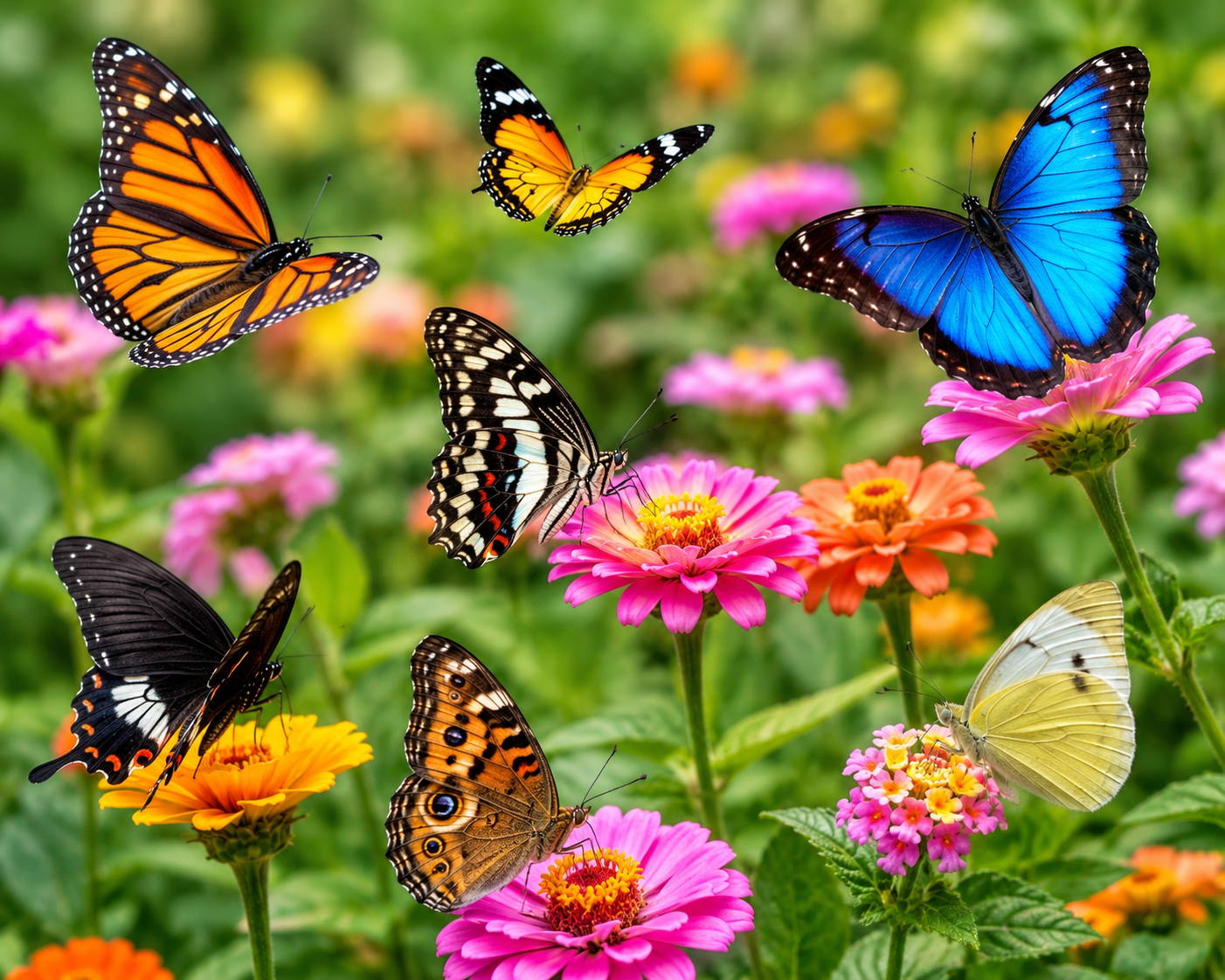
Introduction: Beautiful Butterflies in Nature
Few creatures capture the beauty of the natural world quite like beautiful butterflies. With colorful wings, delicate patterns, and graceful movements, butterflies can transform an ordinary garden, meadow, or forest into a lively natural landscape. Their bright colors may attract our attention, but butterflies are much more than attractive insects.
Butterflies play important roles in natural ecosystems. Many visit flowers to feed on nectar and can transfer pollen between flowers while doing so. They are also connected to plants throughout their life cycle, because caterpillars often depend on particular host plants for food and development.
The presence of butterflies can also tell us something about the environment. Scientists have used butterfly populations and communities as indicators when studying changes in ecosystems because butterflies can respond to changes in habitat and environmental conditions.
From their fascinating transformation from caterpillar to adult butterfly to their role in pollination and food webs, these small creatures are an important part of nature.
In this article, we will explore the world of beautiful butterflies, their life cycle, their relationship with plants, their ecological importance, and simple ways we can help protect them.
1. Beautiful Butterflies Add Color to Nature
One of the first things people notice about beautiful butterflies is their incredible variety of colors and patterns.
Butterfly wings can display combinations of blue, yellow, orange, red, white, black, and brown. Some have simple patterns, while others have intricate markings that look almost like paintings created by nature.
These colors are not only beautiful. Depending on the species, wing patterns can play roles in communication, camouflage, warning, or attracting mates.
When butterflies move from flower to flower, their colorful wings create a sense of movement across gardens and natural landscapes.
A field filled with wildflowers and flying butterflies can be one of the most beautiful sights in nature.
This is why butterflies are often associated with natural beauty. They remind us that even the smallest creatures can contribute greatly to the appearance and character of an ecosystem.
2. Beautiful Butterflies Have a Fascinating Life Cycle
The life cycle of beautiful butterflies is one of the most remarkable examples of transformation in nature.
A butterfly begins its life as an egg. The female usually lays eggs on or near plants that will provide suitable food for the caterpillars.
When the egg hatches, a caterpillar emerges. At this stage, the insect looks completely different from the adult butterfly.
The caterpillar spends much of its time feeding and growing. Many caterpillars depend on particular plant species, which makes the relationship between butterflies and plants especially important.
After growing enough, the caterpillar enters the pupal stage. Inside the chrysalis, its body undergoes a dramatic transformation.
Eventually, an adult butterfly emerges.
The newly emerged butterfly expands and dries its wings before beginning its adult life.
This transformation is one reason butterflies are often used as symbols of change, growth, and renewal.
3. Beautiful Butterflies Help With Pollination
One of the most important ecological roles of beautiful butterflies is their contribution to pollination.
When butterflies visit flowers to drink nectar, pollen can stick to their bodies. As they move from one flower to another, some of that pollen can be transferred.
Butterflies are not generally as specialized for collecting pollen as many bees, but they can still act as pollinators while feeding on flowers. The U.S. Geological Survey notes that many butterflies visit wildflowers for nectar and can transfer pollen between flowers.
Smithsonian Gardens also notes that butterflies commonly visit flowers with broad landing surfaces and narrow nectar-containing structures, including plants such as salvias and sunflowers.
Pollination allows flowering plants to reproduce and produce seeds.
This means that the presence of butterflies can contribute to healthy plant communities.
The relationship is beneficial in another way as well. Butterflies receive nectar as an energy source while flowers benefit from pollen movement.
4. Beautiful Butterflies Depend on Plants
The relationship between beautiful butterflies and plants begins long before the adult butterfly visits a flower.
Caterpillars need food to grow, and many butterfly species have specific host plants that their caterpillars can use.
This means that simply planting flowers may not always be enough to create a successful butterfly habitat.
A good butterfly garden can include both nectar plants for adult butterflies and suitable host plants for caterpillars.
The Smithsonian explains that butterflies depend on plants throughout their lives, with caterpillars feeding on particular host plants and adult butterflies visiting flowers for nectar.
This relationship demonstrates how closely connected different parts of an ecosystem can be.
A butterfly needs plants, plants benefit from pollination, and other animals may depend on both butterflies and plants for food.
5. Beautiful Butterflies Are Part of the Food Web
Although butterflies are famous for their beauty, they are also part of larger food webs.
Butterflies and caterpillars can serve as food for birds, spiders, insects, reptiles, amphibians, and other animals.
Caterpillars can be particularly important sources of food for some birds because they are soft-bodied and relatively easy to collect.
This means that protecting butterflies is not simply about protecting one attractive insect.
Healthy butterfly populations can be part of healthy ecological relationships.
When habitats lose plant diversity or become heavily disturbed, butterflies and the organisms connected to them can also be affected.
The presence of beautiful butterflies therefore represents one small but important part of a much larger natural system.
6. Beautiful Butterflies Can Tell Us About Ecosystem Health
Butterflies can be useful when scientists study environmental change.
Their populations can respond to changes in temperature, vegetation, habitat quality, and other environmental factors.
A USGS report describes butterflies as potential ecological indicators because changes in their abundance and diversity can be associated with changes in ecosystem conditions.
This does not mean that seeing butterflies automatically proves that an ecosystem is healthy.
Instead, scientists can study butterfly communities alongside other environmental information to better understand changes in habitats.
Because butterflies are relatively visible and their relationships with plants are often well documented, they can be useful subjects for ecological monitoring.
This gives beautiful butterflies an important role beyond pollination and natural beauty.
7. Beautiful Butterflies Make Gardens More Lively
A garden filled with beautiful butterflies can feel more alive.
Butterflies are naturally attracted to flowering plants that provide nectar, while suitable host plants can support their caterpillars.
Creating a butterfly-friendly garden can therefore provide benefits for both people and wildlife.
Native plants are often particularly useful because local butterflies and other pollinators may have evolved alongside them.
A butterfly garden does not have to be huge. Even a small outdoor space can provide nectar, shelter, and suitable plants.
Smithsonian Gardens recommends creating pollinator-friendly habitats using appropriate plants and water features, while emphasizing the importance of understanding the needs of pollinators.
A garden designed for butterflies can also become an educational space where children and adults observe insects and learn about nature.
8. Beautiful Butterflies Are Masters of Adaptation
The survival of beautiful butterflies depends on many adaptations.
Their wing colors and patterns can help them blend into their surroundings or make them difficult for predators to approach.
Some species have markings that resemble eyes, while others have colors that may warn predators that they are unpleasant or dangerous to eat.
Butterflies also have specialized mouthparts called a proboscis, which they use to access nectar from flowers.
Different butterfly species may be adapted to different habitats and plant communities.
Their ability to interact closely with particular plants demonstrates the complexity of evolution and natural selection.
When we look at a butterfly resting on a flower, we are seeing the result of countless generations of adaptation.
9. Beautiful Butterflies Bring People Closer to Nature
The appeal of beautiful butterflies is not limited to scientists or gardeners.
Butterflies can encourage ordinary people to spend more time outdoors.
A child seeing a brightly colored butterfly for the first time may become curious about insects. A photographer may begin exploring gardens and forests. A gardener may decide to plant native flowers.
In this way, butterflies can create a connection between people and the natural world.
Their beauty can encourage curiosity, and curiosity can lead to greater understanding.
Learning about butterflies also teaches us that nature is interconnected.
A butterfly depends on plants, plants depend on pollination, and many animals depend on both plants and insects.
Understanding these relationships can make people more interested in protecting natural habitats.
10. Beautiful Butterflies and Their Seasonal Movements
Some butterfly species travel considerable distances during seasonal movements.
The monarch butterfly is one of the best-known examples. Its migrations have attracted scientific attention and public admiration.
Migration allows some butterflies to move between areas where they can find suitable temperatures, food, or breeding conditions.
These journeys can be remarkable considering the small size of butterflies.
Seasonal movements also show why protecting habitats in multiple locations can be important.
A butterfly may depend on different environments during different stages of its life.
The story of migrating butterflies demonstrates that conservation cannot always focus on one small location.
Protecting connected habitats can be important for species that move between regions.
Why Are Beautiful Butterflies Important to Nature?
The importance of beautiful butterflies comes from several connected roles.
First, many butterflies participate in pollination when they visit flowers for nectar. Second, caterpillars depend on plants and can influence plant communities through their feeding. Third, butterflies and caterpillars provide food for other animals.
Butterflies can also serve as subjects for ecological monitoring.
Finally, their beauty encourages people to notice and appreciate nature.
These roles may seem small individually, but together they demonstrate how butterflies fit into larger ecosystems.
Nature is built from relationships between organisms.
Butterflies are one part of this complex system, and protecting them can help preserve the habitats and plant communities they depend on.
Threats Facing Beautiful Butterflies
Despite their beauty and ecological importance, many butterfly species face environmental challenges.
Habitat loss is one of the major concerns. When natural areas are replaced by buildings, roads, intensive agriculture, or other development, butterflies can lose the plants and shelter they need.
Pollution and pesticide use can also create problems.
Climate and land-use changes may alter the availability of suitable habitats and food resources.
The Smithsonian notes that habitat destruction, pollution, land development, modern farming practices, and indiscriminate pesticide use can threaten butterflies and the plants associated with them.
These threats show why butterfly conservation is connected to broader environmental protection.
Protecting butterflies means protecting plants, habitats, and the ecological relationships that support them.
How to Protect Beautiful Butterflies
There are several simple ways individuals can support beautiful butterflies.
Plant Native Flowers
Choose flowering plants that are suitable for your local environment and provide nectar throughout different seasons.
Add Host Plants
Remember that caterpillars need food too. Research which host plants are suitable for butterfly species in your region.
Avoid Unnecessary Pesticides
Pesticides can affect more than the insects people consider pests. Where appropriate, use wildlife-friendly gardening practices.
Provide Water and Shelter
Butterflies may benefit from shallow water sources and sheltered areas where they can rest.
Avoid Disturbing Wild Butterflies
Enjoy butterflies by observing and photographing them rather than catching or harming them.
Protect Natural Habitats
Support local conservation projects and protect natural areas whenever possible.
Creating butterfly-friendly spaces can benefit butterflies as well as other pollinators and wildlife.
Beautiful Butterflies and the Importance of Biodiversity
Biodiversity means the variety of life found within an ecosystem.
A healthy natural area can contain many different plants, insects, birds, mammals, fungi, and microorganisms.
Beautiful butterflies contribute to this diversity as both insects and participants in ecological relationships.
When biodiversity is strong, ecosystems can contain many interconnected species performing different roles.
Butterflies also have relationships with specific plants, which means that protecting butterfly diversity may require protecting plant diversity as well.
This is why conservation should focus on ecosystems rather than individual species alone.
A butterfly-friendly environment can become a more diverse environment overall.
Beautiful Butterflies Inspire Art and Photography
Butterflies have inspired artists and photographers for generations.
Their colorful wings provide natural patterns that can be photographed in gardens, forests, and meadows.
Macro photography can reveal details that are difficult to see with the naked eye, including tiny scales and intricate wing patterns.
Artists may also use butterfly shapes and colors as inspiration for paintings, illustrations, clothing designs, jewelry, and other creative work.
The visual appeal of beautiful butterflies demonstrates how nature can influence human creativity.
At the same time, photography and art can help raise awareness about butterfly conservation.
When people see the extraordinary diversity of butterfly species, they may become more interested in protecting their habitats.
Beautiful Butterflies Teach Us About Transformation
Perhaps one of the most memorable lessons from beautiful butterflies is transformation.
A caterpillar and an adult butterfly look completely different, yet they are stages of the same organism’s life cycle.
This transformation has made butterflies powerful symbols of change and renewal in many cultures.
From a scientific perspective, metamorphosis is an extraordinary biological process.
From a human perspective, it can remind us that change can be a natural part of growth.
This combination of scientific fascination and symbolic meaning has helped make butterflies some of the most admired creatures in the natural world.
Final Thoughts on Beautiful Butterflies
Beautiful butterflies are much more than colorful insects flying through gardens.
They are part of complex ecosystems, interact closely with plants, contribute to pollination, provide food for other animals, and can help scientists study environmental change.
Their life cycle is equally fascinating. From tiny eggs and hungry caterpillars to chrysalises and winged adults, butterflies demonstrate the remarkable diversity and adaptability of life.
But their future depends on healthy habitats.
By planting suitable flowers, providing host plants, reducing unnecessary pesticide use, protecting natural areas, and respecting wildlife, people can help create environments where butterflies can survive.
The next time you see a butterfly flying through a garden, take a moment to appreciate it.
Its colorful wings may be beautiful, but there is much more happening behind that beauty.
Every butterfly is part of a larger story involving plants, pollinators, predators, habitats, seasons, and biodiversity.
Protecting beautiful butterflies means protecting a small but valuable part of the natural world.
Frequently Asked Questions About Beautiful Butterflies
Why are butterflies important to nature?
Butterflies are important because many species contribute to pollination, participate in food webs, depend on plants throughout their life cycle, and can provide useful information when scientists monitor ecological conditions.
What do butterflies eat?
Adult butterflies commonly feed on flower nectar using their long proboscis. Caterpillars generally feed on plant leaves, and many species depend on particular host plants.
How do butterflies help flowers?
When butterflies visit flowers for nectar, pollen can attach to their bodies and potentially be transferred to other flowers. This makes many butterflies occasional or important pollinators for certain plants.
How can I attract beautiful butterflies to my garden?
Plant suitable nectar-producing flowers, provide host plants for caterpillars, avoid unnecessary pesticide use, and create a safe environment with shelter and water. Native plants can be especially valuable for local pollinators.
Why are butterflies considered indicators of environmental change?
Butterfly populations can respond to changes in habitat, vegetation, temperature, and other environmental conditions. For this reason, scientists can use butterfly communities as one source of information when studying ecosystem conditions.
What is the life cycle of a butterfly?
A butterfly typically develops through four major stages: egg, caterpillar, pupa or chrysalis, and adult butterfly.
Why are butterflies losing their habitats?
Habitat loss can occur because of land development, deforestation, intensive agriculture, pollution, and other changes to natural environments. These changes can remove the plants butterflies need for food, breeding, and shelter.
SEO & Rank Math Content AI Setup
Focus Keyword
beautiful butterflies
Is keyword ko Rank Math Content AI aur normal Rank Math SEO Focus Keyword dono mein same rakhein. Rank Math ke mutabiq, Content AI aur Content Analysis ke recommendations ko sync karne ke liye researched focus keyword aur primary focus keyword same hona chahiye.
Secondary Keywords
- beautiful butterflies
- butterfly beauty
- butterflies in nature
- role of butterflies in nature
- importance of butterflies
- butterfly pollination
- butterfly habitat
- butterfly life cycle
- colorful butterflies
- butterfly conservation
- butterflies and flowers
- butterflies and nature
- pollinators
- natural beauty
SEO Title
10 Amazing Facts About Beautiful Butterflies and Their Role in Nature
Is mein number + focus keyword + main topic teeno aa rahe hain.
Meta Description
Discover beautiful butterflies and their important role in nature, from pollination and biodiversity to their fascinating life cycle and conservation.
URL Slug
beautiful-butterflies-role-in-nature
Focus keyword URL mein included hai. Rank Math bhi focus keyword ko URL slug mein use karne ki recommendation deta hai.
Suggested Internal Links
Aapke previous articles ke saath naturally ye internal links add karein:
- beauty of nature → The Beauty of Nature: Why We Love Natural Places
- beauty of mountains → The Magic of Mountains: Nature’s Most Beautiful Gift
- beautiful flowers in nature → 10 Most Beautiful Flowers in Nature
- beauty of oceans → The Beauty of Oceans and Blue Waters
- beauty of sunrise and sunset → The Beauty of Sunrise and Sunset
Example:
Butterflies are another wonderful part of the beauty of nature, just like mountains, oceans, flowers, and beautiful landscapes.
Is example mein beauty of nature ko apne existing article ke URL se link karein.
Suggested External Links
Article ke factual sections mein authoritative sources ke links add karein, especially:
- Smithsonian — butterfly life cycle and conservation
- U.S. Geological Survey — pollinators and butterfly ecology
- USDA Forest Service — pollinator-friendly habitats
Rank Math Content AI specifically external-link suggestions bhi provide karta hai, aur relevant authoritative external resources add karna on-page SEO ke liye useful hai.
Suggested Images
Article mein 4–6 relevant images use kar sakti hain:
- Colorful butterfly sitting on a flower
- Monarch butterfly on a plant
- Butterfly life cycle
- Butterfly garden with flowers
- Close-up of butterfly wings
- Several butterflies in a natural meadow
Suggested image alt texts:
beautiful butterflies on colorful flowerscolorful butterfly in naturebutterfly life cycle from caterpillar to adultbutterfly garden with flowering plantsbeautiful butterfly resting on a flower
Keyword ko har image ke alt text mein repeat na karein. Alt text image ko accurately describe kare; Rank Math bhi relevant and natural keyword use recommend karta hai.
Rank Math Content AI mein Final Optimization
WordPress mein article paste karne ke baad:
Rank Math → Content AI → Research → beautiful butterflies
Content AI current ranking data analyze karke recommended word count, headings, links, media, related keywords aur questions show karega.
Phir:
Keywords → relevant keywords naturally add karein
Questions → relevant questions ko FAQ section mein cover karein
Links → relevant authoritative external sources add karein
Content Analysis → internal links, external links aur media check karein
Rank Math khud recommend karta hai ke suggested keywords ko naturally use kiya jaye, keyword stuffing na ki jaye. Isliye har paragraph mein exact “beautiful butterflies” repeat karna zaroori nahi hai.
Important: Google ke liye sirf Rank Math ka green score guarantee nahi deta ke article rank karega. Helpful, original, readable content, accurate information, good page experience aur relevant search intent bhi important hain. Rank Math ka Content AI score bhi apne analyzed SERP data ke comparison par based hota hai, isliye exact recommended counts aapke WordPress research ke waqt change ho sakte hain.
Pingback: 10 Amazing Reasons to Love the Beauty of Rainy Weather